Friday, February 6, 2015

Notes #41 Communication & Presentation

As leaders we need to be communicators.  This is important for many aspects of leadership.  As leaders we should develop a vision.  But what good is that vision if we are unable to convey that vision to those we lead such that they accept and buy in to that vision.  In leading people, we must be able to communicate with them, and that includes finding out what they need and want.  This communication could be one on one or small groups.


 Too often communication is seen as being totally separate from leadership.   There are programs and classes on speech and communication, but divorced from leadership.  On the flip-side, sometimes people think that leaders must be great orators.  Well, yes, some have been, for good or bad.  But there have also been quiet people who are great leaders as well, but they still were able to communicate.

And always keep in mind that communication can be written as well as verbal.  Can you organize your thoughts, put them down in a form that others can understand?  This, too is important.

Friday, January 23, 2015

Notes #40 Leadership at the Movies I

Most people probably love to watch movies.  They can entertain.  Make us laugh or cry (or both).  Many of them have a lesson to teach.  It’s in those we want to look at.  Often times with leadership, being able to show our students examples of leadership (sometimes good, sometimes bad) can be a powerful way of helping them understand leadership.


Movies are a great way to do so. In several leadership courses I've been involved in over the years, movies (or selections from movies) have been part of the program.

In your own group or organization, showing movies can be very useful, not just for the entertainment value, but from the lessons they show.  This will hopefully be the first of several Notes to illustrate movies (and maybe tv shows) that can illustrate lessons of leadership.  Doing so should not be strange.  In doing some of the research for this Note, I found a few books that are about that, such as Movies to Manage By and Reel Lessons in Leadership. (I have not reviewed these books, but would hope they could be valuable resources).

Friday, January 9, 2015

Notes #39 Stephen Covey and his 7 Habits

There are those works which are so popular that many people just blow them off.  The works of the late Stephen Covey fall into that category.  They've been around for so long that too often people overlook them.  And like most popular works, he has his detractors, who are put off by numbered lists and charts (6 these and 5 those and the like).  While his works seem to principally focus on managing your time, which is a skill that all leaders need, there is a lot more to his works then that.  There is a lot to his works that require more than a superficial reading. 


Friday, December 19, 2014

Notes #38: More Games (Sam Sikes, Chris Cavert, Jim Cain and more)

So here we have one more (maybe final) Notes on games (cooperative, initiative, etc).  This one, unlike the prior one, has LOTS of resources.  I guess that makes up for the dearth of that one.  Here I give a very high level overview of several resources and authors I have come across (not all I have used and read, but when I see the same peoples’ work available from several sources, I have to think it should be of value).  So who are these people?  In no particular order.

Friday, December 5, 2014

Notes #37: Servant Leadership Redux I

Every so often in this series I will revisit concepts, maybe delve into them deeper or provide new (or newly found) resources.  Servant leadership is a topic that is still expanding with new works or has works that should be explored further.  So here are some additional works and some I mentioned too briefly in the past.

First off, here is a great video I found on Greenleaf and the Greenleaf Center: 


Friday, November 21, 2014

Notes #36: Team Assessments

We are all part of groups of people working together, whether at work or the various organizations we are part of.  But is that group a team?  And how good of a team is it?  How can you assess that team?  Here are a couple of different, but similar models.

Blanchard et al (authors of the various situational leadership concepts we've touched on in past Notes) uses the PERFORM model.  

Friday, November 7, 2014

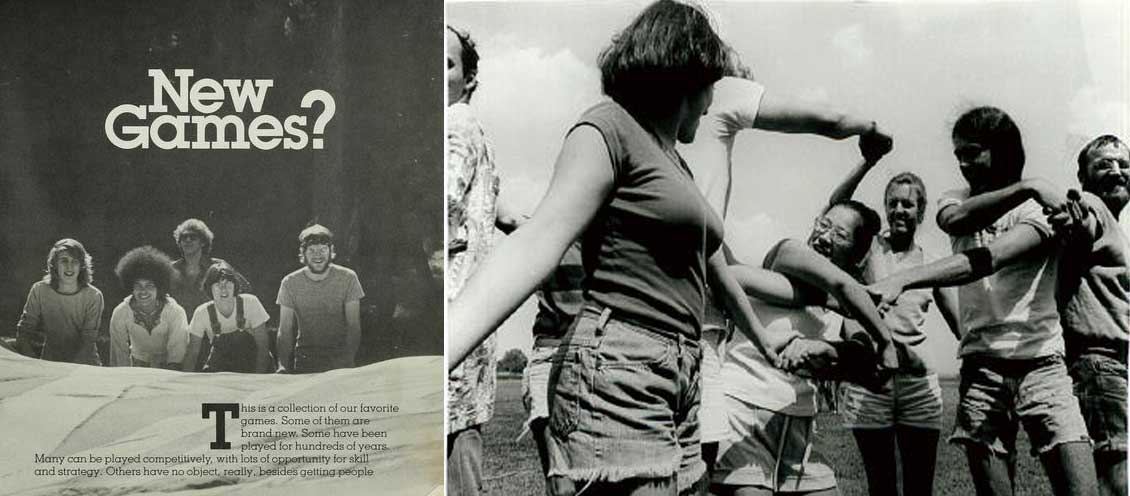
Notes #35: New Games & the New Games Movement

The New Games Movement is something that grew out of the counter culture of the late 1960s. It aimed to provide a new experience for people, one that brought people together, rather than create divides. There is a big element of cooperation to the games. While there may be some competition in some of the games, being a winner isn’t important. (“You won the game, great! You get to start the next one”) And the idea is that EVERYONE is engaged. There are no spectators, and even the referees get in on the fun. One of the first of the New Games was the use of an “earthball”, a large (6 foot diameter), inflated ball with the globe painted on it. It was used at the first New Games Festival in 1973. The motto of New Games, emblazoned on the back of their t-shirts is: “Play Hard, Play Fair, Nobody Hurt”.